How Security Labels Help Consumer Electronics Brands Combat Counterfeit Products
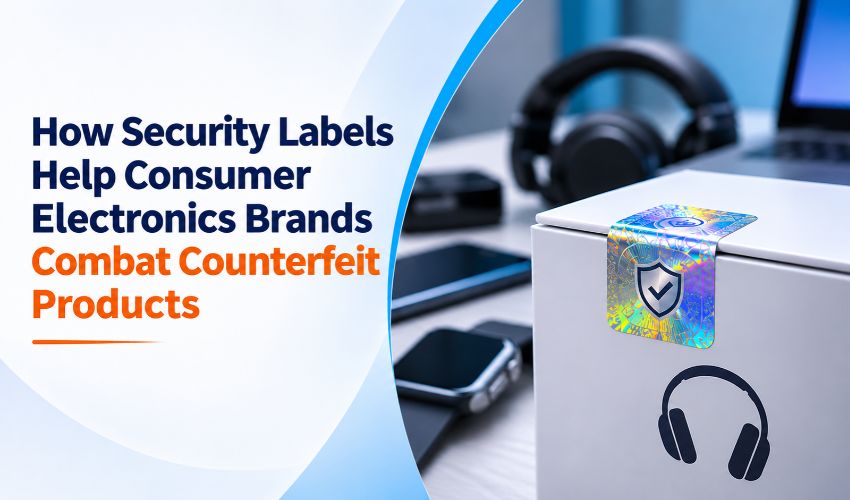
The consumer electronics industry is growing rapidly, with smartphones, laptops, televisions, headphones, chargers, batteries and other electronic accessories becoming an essential part of everyday life. However, this growth has also created opportunities for counterfeit products to enter the market. Counterfeit electronic products can damage brand reputation and, in some cases, expose consumers to safety risks.
Counterfeit electronics may look almost identical to genuine products, making it difficult for customers, retailers and distributors to identify them. These products can contain low-quality components, fail to meet safety standards and offer poor performance.
For electronics manufacturers, protecting products throughout the supply chain has become increasingly important. One effective measure is the use of security labels for consumer electronics, as part of a broader product authentication and brand protection strategy. These labels can incorporate security features such as holograms, QR codes, tamper-evident materials and unique serial numbers to support product authentication and help identify suspicious or unauthorised products.
In this article, we explore how security labels help consumer electronics brands combat counterfeiting and build customer trust.
What Are Security Labels for Consumer Electronics?
Security labels are specially designed identification and authentication labels used on electronic products, packaging and accessories to support product authenticity verification.
Unlike ordinary product labels, security labels can incorporate specialised features designed to make unauthorised reproduction more difficult and reveal signs of attempted removal or interference.
Depending on the product, packaging requirements and selected label construction, security labels may incorporate features such as:
- Hologram labels: Provide visual authentication through specialised optical effects and security designs.
- QR code labels: Allow customers to scan a code and access product information or an authentication platform, depending on the verification system .
- Tamper-evident labels: Designed to reveal visible signs of interference or removal attempts, depending on their construction.
- Serialised security labels: Carry unique identification numbers for individual product tracking.
- VOID labels: Display a visible message or pattern when removed, indicating possible tampering.
- Covert security features: Include hidden elements that can be verified using specialised equipment.
By combining suitable security features with appropriate verification processes, electronics manufacturers can strengthen their product authentication systems.
1. Help Customers Identify Genuine Electronic Products
One of the biggest challenges for electronics brands is helping customers distinguish genuine products from counterfeit alternatives.
Fake chargers, batteries, earphones and other accessories are often sold through unauthorised sellers or online marketplaces. Their packaging may look similar to the original, making identification difficult.
Hologram labels for electronics provide an additional layer of visual authentication. These labels can incorporate customised brand logos, security patterns, microtext and optical effects that are difficult to reproduce accurately using standard printing methods.
For applications requiring advanced optical effects and enhanced visual security, Holoflex's ENGRAVION™ OVD origination technology offers opportunities to develop distinctive holographic designs that combine aesthetics with product authentication.
Customers and retailers can examine these distinctive visual features as an additional way to assess product authenticity.
For brands, customised holographic security labels provide distinctive visual authentication features that can help distinguish genuine products from counterfeit alternatives.
2. Protect Products Against Packaging Tampering
Counterfeiters do not always manufacture completely fake products. In some cases, they open original packaging, replace genuine components with cheaper alternatives and reseal the product for resale.
This creates another challenge for consumer electronics manufacturers.
Suitable tamper-evident security labels help address this problem by revealing visible signs of attempted opening, removal or interference.
For example, VOID labels can leave behind a message or pattern when someone attempts to remove them. Destructible labels may break into small pieces during removal, making reuse difficult.
These anti-counterfeit labels for electronics can be applied to:
- Smartphone and laptop packaging
- Electronic accessories and chargers
- Batteries and power banks
- Warranty seals and selected service access points
- Original equipment manufacturer (OEM) packaging
By making unauthorised access easier to identify, tamper-evident labels help reveal signs of unauthorised access and support packaging integrity during distribution and retail handling.
3. Enable Easy Product Verification Through QR Codes
Digital authentication is becoming an important part of modern brand protection strategies.
QR code security labels can allow consumers to check product information and, when linked to a suitable authentication system, verify electronic products using their smartphones. Instead of relying only on the appearance of packaging, customers can scan a unique code and access an online verification page.
Depending on the authentication system, the verification page can display:
- Product name and model number
- Manufacturer information
- Unique product identification number
- Authentication status
- Manufacturing or batch details
- Warranty registration information
For example, a customer purchasing a smartphone charger can scan the QR code printed on its security label to check whether the product is registered in the manufacturer's authentication database.
Brands can use unique verification codes and scan-monitoring systems to identify repeated scans, duplicate identifiers or other suspicious verification activity.
However, QR codes alone do not guarantee authenticity. They should be supported by secure code generation, protected databases and appropriate verification systems.
4. Improve Product Tracking With Serialised Security Labels
Every electronic product has its own manufacturing and distribution journey. Tracking individual products across this journey can help manufacturers identify unauthorised distribution and suspicious activities.
Serialised security labels support this process by assigning a unique identification number to each product or package.
Unlike ordinary batch numbers, individual serial numbers help brands identify specific units.
For example, an electronics manufacturer can assign a unique serial number to every laptop produced at its manufacturing facility. This number can be linked to product information, manufacturing details, distribution records and warranty registration.
Serialised labels can help businesses:
- Track products across distribution channels.
- Identify duplicate or suspicious product numbers.
- Improve warranty management.
- Monitor product movement through recorded scanning and tracking events.
- Support product recall activities by helping identify affected units through recorded product data.
- Investigate counterfeit product complaints.
When integrated with suitable authentication and data-management systems, serialised security labels can support product verification and supply chain management.
5. Strengthen Brand Protection With Multiple Security Features
Counterfeiters continuously improve their copying techniques. Therefore, relying on a single security feature may not provide sufficient protection for high-value electronic products.
A more effective approach may be to combine multiple security technologies within a label or across the product's packaging.
For example, a customised security label for a premium electronics brand may include a holographic design, a unique serial number, a QR code and a tamper-evident adhesive.
Each feature serves a different purpose.
The hologram provides visual authentication, the QR code supports digital verification, the serial number enables product tracking, and the tamper-evident adhesive helps identify unauthorised opening or removal.
Some brands may also incorporate covert features that authorised personnel can verify using specialised tools.
This layered approach can make it more difficult for counterfeiters to reproduce the complete set of security features.
6. Build Consumer Confidence and Protect Brand Reputation
Customers expect electronic products to be genuine, safe and reliable. Purchasing counterfeit electronics can lead to device malfunction, poor performance, battery-related safety issues and financial losses.
Accessible and reliable product verification processes can help build consumer confidence.
Security labels also communicate that a manufacturer takes product quality and customer protection seriously.
For electronics brands, this can contribute to:
- Greater customer confidence.
- Improved ability to identify and address potential counterfeit products.
- Better warranty and after-sales management.
- Stronger brand recognition.
- Improved supply chain transparency.
Although security labels cannot eliminate counterfeiting completely, they provide an important layer of protection when combined with effective distribution controls and authentication processes.
How to Choose the Right Security Labels for Electronic Products
Selecting the right electronic product security labels depends on the product type, packaging material, distribution model and level of security required.
Before choosing a solution, manufacturers should consider the following factors:
Product value and risk: High-value products such as smartphones, laptops and premium electronic components may require multiple authentication features.
Label material: The label should be compatible with the surface on which it will be applied, including cardboard, plastic, metal or coated packaging.
Authentication requirements: Brands should decide whether they need visual verification, digital authentication, tamper evidence or individual product tracking.
Environmental conditions: Labels should withstand expected handling, storage conditions, temperature variations and transportation requirements.
Customisation: Brand-specific holograms, unique designs and customised serialisation can make unauthorised duplication more difficult.
Working with an experienced security label manufacturer can help businesses select suitable technologies for their product protection requirements.
Conclusion
Counterfeit products remain a major challenge for consumer electronics brands, affecting customer confidence, product safety and business reputation. As counterfeiting methods become more sophisticated, manufacturers need reliable ways to protect their products and verify authenticity.
Security labels for consumer electronics offer an important layer of protection through holographic features, QR code-based verification, tamper-evident technologies and unique serialisation. When these features work together, they help brands identify genuine products, detect unauthorised tampering and improve product traceability.
For electronics manufacturers looking to strengthen brand protection, investing in customised anti-counterfeit labels can contribute to a more secure and transparent supply chain when supported by appropriate verification and tracking systems.
Holoflex provides customised holographic and security labelling solutions that combine distinctive visual appeal with product authentication and brand protection. Explore customised security solutions to help protect your products and strengthen customer trust.
Frequently Asked Questions (FAQs)
1. What are security labels for consumer electronics?
Security labels for consumer electronics are specially designed labels that help manufacturers authenticate products and protect them against counterfeiting and tampering. They may include holograms, QR codes, unique serial numbers and tamper-evident features.
2. How do security labels help combat counterfeit electronic products?
Security labels can incorporate specialised features that make product identification elements more difficult to copy, alter or reuse. Holographic designs, unique serial numbers, digital verification codes and tamper-evident materials help brands and customers identify suspicious or unauthorised products.
3. How do hologram labels help authenticate electronic products?
Hologram labels use specialised optical effects and customised security designs that are difficult to reproduce using ordinary printing methods. Manufacturers can incorporate brand logos, microtext and other security elements to help customers identify genuine products.
4. Can QR codes be used to verify electronic products?
Yes. QR code security labels can connect customers to an online product authentication system. By scanning a unique code, customers can check product details and verification status. For stronger protection, QR codes should be supported by secure databases and unique identification systems.
5. What is the best security label for electronic products?
The right security label depends on the product and its protection requirements. Hologram labels are useful for visual authentication, QR code labels support digital verification, tamper-evident labels identify unauthorised opening, and serialised labels improve product tracking. Combining these features can provide stronger protection against counterfeiting.
Latest Blogs
How Security Labels Help Consumer Electronics Brands Combat Counterfeit Products
Nov 12, 2026
Anti-Counterfeit Labeling for Cosmetics: Hologram Labels, QR Authentication & Security Features
Oct 30, 2026
How QR Code Authentication and Hologram Labels Work Together to Combat Counterfeiting?
Oct 17, 2026
Anti-Counterfeit Labels for Packaging: How Indian FMCG Brands Prevent Product Duplication in 2026
Sep 28, 2026
Security Labels vs Hologram Labels: Which Anti-Counterfeit Solution Is Best for Indian Manufacturers?
Sep 18, 2026
How Much Do Hologram Security Labels Cost in India? A Procurement Guide for Businesses (2026)
Aug 21, 2026
Garment Tags in India: How Brands Use Custom Tags to Increase Perceived Value & Sales
Jul 27, 2026
Custom Security Labels: How Indian Manufacturers Should Use Them for Tracking & Protection
Jul 16, 2026

Top Benefits of Shrink Sleeve Labels for Product Packaging
Jun 29, 2026
Security Labels for Automotive Parts Manufacturers
Jun 23, 2026

The Evolution of Holographic Technology: From Visual Authentication to Advanced Optical Security
Jun 10, 2026

Smart Labelling Solutions For Food & Beverage Packaging
May 25, 2026

How Secure Packaging Helps E-Commerce Brands Reduce Fraud?
May 21, 2026

How Security Holograms Prevent Counterfeit Pharmaceuticals in India
Jul 16, 2025
Top 5 Custom Hologram Applications for FMCG Packaging
Jul 24, 2025
How Security Holograms Shield FMCG Packaging from the Rising Counterfeit Menace
Aug 16, 2025

Why Self-Adhesive Labels Are the Smarter Choice for Modern Packaging
Aug 21, 2025
Revolutionizing Brand Protection: Holographic Security Packaging with Integrated Phygital Solutions
Oct 23, 2025
Protecting Your Brand with Tamper-Evident Labels in India
Oct 30, 2025
OVDs vs Traditional Holograms: What Modern Brands Should Choose in 2026
Dec 19, 2025
Eco-Friendly Label Materials: How Brands Can Reduce Packaging Waste Without Losing Security
Jan 06, 2026
The Rise of OVD-Led Authentication - Where Design and Advanced Authentication Converge
Feb 12, 2026
When Security Becomes Design in the Evolution of Garment Tags?
Feb 24, 2026
Holograms & OVDs in Security Labels and Stickers: A Smart Way to Protect Products
Mar 17, 2026

Customised Packaging Labels in India: A Complete Guide for Businesses
Mar 24, 2026
How Advanced OVD Technology is Transforming Hologram Security in 2026?
Apr 28, 2026